


Khajuraho, a UNESCO World Heritage destination in Madhya Pradesh, is one of India’s most fascinating historical and architectural sites. Famous for its intricately carved temples, Khajuraho showcases the brilliance of medieval Indian art and culture. Built between the 9th and 12th centuries by the Chandela dynasty, these temples are admired for their detailed sculptures, spiritual symbolism, and artistic excellence. Here’s a complete travel guide to the top temples and attractions in Khajuraho.
1. Western Group of Temples – The Main Highlight
Western Group of Temples Khajuraho
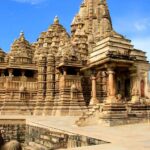
The Western Group of Temples is the most popular and well-preserved cluster in Khajuraho. It is a UNESCO World Heritage Site and houses some of the finest temples in India.
- Kandariya Mahadeva Temple: The largest and most magnificent temple, dedicated to Lord Shiva. It features towering spires and highly detailed carvings.
- Lakshmana Temple: Known for its intricate sculptures and architectural symmetry, dedicated to Lord Vishnu.
- Devi Jagdamba Temple: Famous for its beautiful carvings and spiritual significance.
The temples here are especially known for their sculptures depicting everyday life, mythology, and human emotions.
2. Eastern Group of Temples – Jain Heritage
Eastern Group of Temples Khajuraho
This group mainly consists of Jain temples and offers a quieter, more peaceful experience compared to the Western Group.
- Parshvanatha Temple: The largest Jain temple in Khajuraho, featuring exquisite carvings.
- Adinath Temple: Dedicated to the first Jain Tirthankara, known for its elegant design.
These temples highlight the religious diversity and artistic richness of the region.
3. Southern Group of Temples – Hidden Gems
Southern Group of Temples Khajuraho
The Southern Group is less crowded but equally fascinating.
- Duladeo Temple: Dedicated to Lord Shiva, known for its graceful sculptures.
- Chaturbhuj Temple: Unique for its large statue of Lord Vishnu and absence of erotic carvings.
These temples provide a peaceful environment for those looking to explore beyond the main tourist areas.
4. Light and Sound Show
Khajuraho Light and Sound Show
Held every evening in the Western Group complex, the light and sound show narrates the history of Khajuraho and the Chandela dynasty. The temples are beautifully illuminated, creating a magical atmosphere. It’s a great way to understand the historical context of the site.
5. Raneh Falls – Natural Beauty Nearby
Raneh Falls
Located about 20 km from Khajuraho, Raneh Falls is a stunning natural attraction on the Ken River. The canyon is made of colorful volcanic rock formations, making it a unique geological site. It’s an ideal spot for nature lovers and photographers.
6. Panna National Park – Wildlife Experience
Panna National Park
Around 25 km from Khajuraho, Panna National Park offers an exciting wildlife experience. Visitors can spot tigers, leopards, deer, and various bird species. Jungle safaris here are a great addition to your Khajuraho trip.
Best Time to Visit
The ideal time to visit Khajuraho is between October and March when the weather is pleasant. Summers can be extremely hot, while monsoons bring greenery but may affect travel plans.
How to Reach
- By Air: Khajuraho has a domestic airport with connections to major cities.
- By Train: The Khajuraho Railway Station connects the town to cities like Delhi and Varanasi.
- By Road: Well-connected by road to nearby cities such as Jhansi and Satna.
Travel Tips
- Wear comfortable footwear, as exploring temples involves walking.
- Hire a local guide to better understand the carvings and history.
- Visit early in the morning or late afternoon to avoid crowds and heat.
- Respect the cultural and religious significance of the site.

Leave a Reply