


India is home to one of the largest collections of UNESCO World Heritage Sites in the world, reflecting its extraordinary cultural diversity, architectural brilliance, and natural richness. From ancient temples and grand forts to pristine wildlife sanctuaries, these sites preserve the legacy of civilizations that have flourished on the subcontinent for thousands of years. Here are some of the most famous UNESCO World Heritage Sites in India, showcasing why the country is a treasure trove for history lovers and travelers alike.
Taj Mahal, Uttar Pradesh
Perhaps the most iconic monument in India, the Taj Mahal in Agra is a symbol of eternal love. Built in the 17th century by Mughal emperor Shah Jahan in memory of his wife Mumtaz Mahal, this white marble mausoleum is renowned for its perfect symmetry, intricate carvings, and stunning inlay work. Declared a World Heritage Site in 1983, the Taj Mahal attracts millions of visitors from around the globe and is considered one of the New Seven Wonders of the World.
Qutub Minar and Its Monuments, Delhi
The Qutub Minar, a 73-metre-tall minaret built in the early 13th century, is one of Delhi’s most prominent historical landmarks. Surrounded by ancient structures like the Quwwat-ul-Islam Mosque and the Iron Pillar, this complex reflects the beginning of Indo-Islamic architecture in India. Its detailed inscriptions and red sandstone construction make it an architectural masterpiece.
Red Fort Complex, Delhi
A powerful symbol of India’s history, the Red Fort served as the main residence of Mughal emperors for nearly 200 years. Built by Shah Jahan, its massive red sandstone walls enclose palaces, halls, and gardens that reflect the grandeur of Mughal rule. Today, it holds great national significance, as India’s Independence Day celebrations are held here every year.
Jaipur City, Rajasthan
Known as the Pink City, Jaipur was inscribed as a UNESCO World Heritage Site for its well-planned urban design and remarkable architecture. Founded in 1727, the city features wide streets, orderly layouts, and iconic landmarks such as Hawa Mahal, City Palace, and Jantar Mantar. Jaipur beautifully blends royal heritage with vibrant culture and traditional craftsmanship.
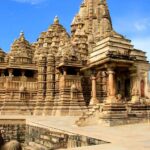
Khajuraho Group of Monuments, Madhya Pradesh
The Khajuraho temples are world-famous for their intricate sculptures and detailed carvings, many of which depict themes of love, devotion, and daily life. Built between the 10th and 12th centuries by the Chandela dynasty, these temples represent a unique artistic expression and remarkable engineering skill. Despite their age, the sculptures remain exceptionally detailed and expressive.
Ajanta and Ellora Caves, Maharashtra
The Ajanta and Ellora Caves are extraordinary examples of rock-cut architecture. Ajanta’s caves are known for their ancient Buddhist paintings and sculptures, while Ellora showcases a harmonious blend of Buddhist, Hindu, and Jain monuments. The Kailasa Temple at Ellora, carved entirely from a single rock, is considered one of the greatest architectural achievements in the world.
Sun Temple, Konark, Odisha
Shaped like a colossal stone chariot, the Sun Temple at Konark is dedicated to the Sun God, Surya. Built in the 13th century, it is famous for its massive wheels, detailed carvings, and astronomical symbolism. Although partially in ruins, the temple remains a stunning example of ancient Indian temple architecture.
Kaziranga National Park, Assam
Among India’s natural World Heritage Sites, Kaziranga National Park stands out for its successful conservation of wildlife, especially the one-horned rhinoceros. The park’s grasslands, wetlands, and forests support a rich variety of flora and fauna, making it a paradise for nature lovers and wildlife enthusiasts.




Leave a Reply